


TMS for OCD
Obsessive-Compulsive Disorder Therapy in Colorado Springs and Monument
How OCD Disrupts Everyday Life
OCD is a mental health disorder characterized by recurring and intrusive thoughts or impulses that cause distress, usually accompanied by repetitive behaviors or mental acts performed as a response to the obsessions. The intrusive thoughts are the “obsession” component of “obsessive compulsive disorder”, while the repetitive behaviors are the compulsions.
Obsessions are unwanted and distressing thoughts or urges that persistently occur in a person’s mind. Obsessions common to OCD include fear of germs and contamination, a need for symmetry and order, disturbing thoughts, or fear of harm or danger to oneself or to loved ones.
Compulsions are repetitive behaviors that individuals with OCD feel compelled to perform. Failure to perform the behavior often induces high levels of anxiety, to the point of needing to go back and execute the routine properly. Compulsions include excessive hand washing or house cleaning, repetitive checking behavior (such as repeatedly checking door locks or household appliances), counting, touching objects, or arranging objects in a particular manner.
Leonardo DiCaprio and OCD in The Aviator
In the movie The Aviator, Leonardo DiCaprio plays the role of Howard Hughes, a famously eccentric billionaire and aviator. Hughes suffered from obsessive compulsive disorder (OCD) throughout his life. In the movie, Hughes is shown carrying his own bar of soap into public restrooms and washing his hands repeatedly. Hughes also follows elaborate behavioral routines exactly. If there is any mistake in the routine, he must start over.
The Aviator OCD scenes gained even more attention when Leonardo DiCaprio publicly announced that he, like Hughes, suffers from OCD.
Like Hughes, DiCaprio also had an excessive fear of germs and would wash his hands frequently. He also had other OCD-typical behaviors such as having to touch things a specific number of times and having to step on cracks in the sidewalk in a very specific way. If he didn’t do it correctly, he would have to go back and start over.
Living with OCD can be severely life-impacting. The compulsions and routines begin to take over, leaving sufferers feeling trapped in a mental prison they cannot escape.

How Psychiatrists Treat OCD
Psychiatrists are medical doctors who specialize in diseases and disorders of the brain, including obsessive compulsive disorder, or OCD. At Colorado Psychiatry Solutions in Monument and Colorado Springs, our psychiatrists treat OCD with medication, ketamine infusions, ketamine-assisted psychotherapy, and TMS (transcranial magnetic stimulation). Offering multiple treatment options ensures patients receive the treatment best suited for their unique needs and condition.
Is TMS Effective at Treating OCD?
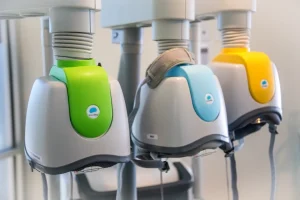
Transcranial magnetic stimulation (TMS) is a groundbreaking mental health treatment that uses the brain’s regenerative properties to induce healing. Using magnetic fields to stimulate specific nerve cells in the brain, TMS targets specific regions of the brain responsible for mood regulation, impulse control, and reward systems. The specific areas of the brain targeted will depend on which condition the patient is being treated for. Unlike medication, TMS does not involve systemic side effects and is safe for long-term use.
TMS has proven to be an effective treatment for OCD. It is FDA-approved for treating OCD and numerous studies have demonstrated its efficacy.
Best OCD Treatment Without Medication
Many patients prefer not to use medication for mental health treatment. There can be issues with severe side effects or medication fatigue. Additionally, an estimated 40 – 60 percent of people with OCD do not get adequate relief from medication.
Patients living near Colorado Springs and Monument have access to an excellent OCD treatment that does not use medication. At Colorado Psychiatry Solutions we offer TMS treatment for OCD: the latest, state-of-the-art OCD therapy available.
Following a full psychiatric evaluation, you may be recommended for TMS therapy (Transcranial magnetic stimulation). Many patients prefer TMS over other OCD treatment options because:
- TMS is non-pharmaceutical. TMS directly stimulates the brain to achieve healing; it does not use medications (such as antidepressants) to achieve relief.
- TMS is effective. TMS boasts high response and remission rates, and is clinically proven to alleviate OCD behaviors, compulsions, and obsessions
- TMS is long-lasting. TMS patients continue to maintain a beneficial response long after TMS therapy has finished. Patients do not have to continually remember to take daily medication
- TMS has no systemic side effects. TMS is extremely well-tolerated. It is non-invasive, requires no anesthesia or numbing, and has no systemic side effects.
- TMS is FDA-approved. TMS is approved by the FDA for treatment of obsessive-compulsive disorder, having demonstrated both safety and efficacy in treating OCD with TMS.


Questions and Answers About TMS for OCD
Is TMS for OCD treatment approved by the FDA?
Yes. The FDA approved TMS as a treatment for OCD in 2018.
Does insurance cover TMS for OCD?
Insurance coverage varies by carrier and plan. Your insurance may cover TMS as a treatment for obsessive-compulsive disorder, provided you meet authorization requirements.
We work directly with your insurance to obtain coverage if possible. We make every attempt to gain coverage and have had success getting hundreds of patients approved for coverage for these conditions.
Schedule a consultation today and we will advocate on your behalf with your insurance company.
Who Is a Good Candidate for TMS?
We are firm believers in TMS as an effective treatment for OCD and other mental health disorders, like depression and anxiety. If you have OCD and have not found adequate relief from medication or other treatment options, you may be a good candidate for TMS.
How To Get Started
To receive an evaluation for TMS treatment, simply schedule an appointment at one of our four convenient locations in Colorado Springs and Monument. You can call 719-622-6522 to speak with an intake specialist or enter your contact information in our online form.
