Living with depression can feel like an exhausting uphill battle, leaving you constantly drained. The standard treatment protocols can sometimes even add to the exhaustion. Many patients continue to be prescribed antidepressant medications, even though the medications aren’t providing real relief. If this sounds familiar, it’s not a reflection on you or your compliance with your treatment plan. It simply means your depression is classified as treatment-resistant.
For over 40 years, Transcranial Magnetic Stimulation (TMS) has offered a non-invasive, drug-free alternative to medications that can achieve remission even in treatment-resistant cases. Using an electromagnetic coil, TMS sends gentle magnetic pulses to stimulate neuronal activity in the brain’s mood centers.
While repetitive TMS (rTMS) therapy was an incredible breakthrough in depression treatment, medical technology is continuously advancing. Newer forms of TMS have reached the market, including what’s known as Deep TMS. Read on to see if Deep TMS may be the depression-treatment answer for you.
What Exactly is Deep TMS?
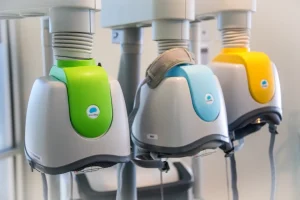
Deep TMS is the next evolution of transcranial magnetic stimulation. While traditional TMS devices penetrate about 2.5 centimeters into the brain, Deep TMS uses a specialized, patented H-coil (manufactured by BrainsWay) to reach up to 4 centimeters beneath the surface of the scalp.
This broader and deeper electrical field ensures that a much larger network of neurons is stimulated. The H-coils specifically target the medial and lateral prefrontal cortex—the exact brain structures responsible for managing mood, behavior, and your brain’s reward system.
The Latest Evidence: Faster, Highly Effective Relief
When evaluating if Deep TMS is “better,” the latest clinical data speaks volumes. Deep TMS has consistently shown remarkable efficacy, and recent advancements have made it even more convenient for patients.
In late 2025, the FDA cleared an Accelerated Deep TMS protocol based on a multi-center, randomized controlled trial. This recent study demonstrated that Deep TMS isn’t just effective; it’s profoundly life-changing for those with treatment-resistant depression:
- Exceptional Success Rates: The 2025 trial revealed that patients receiving accelerated Deep TMS achieved an impressive 87.8% response rate and a 78.0% remission rate.
- Shorter Treatment Timelines: While standard Deep TMS sessions take about 20 minutes daily for 4–6 weeks, newly validated accelerated protocols can condense acute treatment into just a few days of multiple short, 10-minute sessions.
- Expanded Access: In November 2025, the FDA also expanded Deep TMS clearance for adolescents (ages 15–21) suffering from depression, highlighting its proven safety profile across a broader age range.
Depression and OCD Treatment with Deep TMS
Deep TMS is FDA-approved for Major Depressive Disorder (MDD) and Obsessive-Compulsive Disorder (OCD), making it a lifeline for those who haven’t found success with standard talk therapy or psychiatric medications. It is also FDA-approved for treating chronic anxiety and nicotine addiction (including smoking, vaping, and chewing).
Deep TMS can also be used as an off-label treatment for other conditions, such as PTSD and general anxiety disorder. Deep TMS offers a powerful alternative to antidepressant medications. It is explicitly designed to normalize brain activity without the weight gain, insomnia, or emotional blunting commonly associated with SSRIs.
What to Expect During Deep TMS Treatment
The idea of magnetic brain stimulation may sound like science fiction, but the treatment is surprisingly straightforward and comfortable.
- No Sedation Required: You are fully awake and alert during the entire procedure. There is no anesthesia involved.
- Quick Sessions: Standard sessions take just 20 minutes with no patient prep time required.
- Outpatient Convenience: You can drive yourself to and from our clinic for treatment. With four locations in Colorado Springs and Monument, it is likely a Colorado Psychiatry Solutions location is near your home or work. You can easily head back to work, run errands, or go about your day immediately after.
During your first visit, your measurements are taken and the device is perfectly customized to your specific neurology. During subsequent sessions, you’ll simply relax in a comfortable treatment room where you can read, listen to music, or watch TV.
What About TMS Side Effects?
Deep TMS is a safe and effective procedure, especially when compared to invasive procedures like Deep Brain Stimulation or Electroconvulsive Therapy (ECT), which requires anesthesia and carries risks of memory loss and seizures. However, it isn’t entirely without side effects.
During or shortly after treatment, you might experience:
- Minor scalp discomfort where the helmet rests
- Temporary twitching, spasms, or tingling in the face and jaw
- Mild headaches
- Brief lightheadedness
The good news is that these side effects are typically mild, transient, and do not disrupt your quality of life. The majority of patients experience no side effects or only minor side effects during treatment.
Deep TMS Therapy at Colorado Psychiatry Solutions
As the technology behind transcranial magnetic stimulation continues to evolve, Deep TMS stands out as one of the safest, most targeted, and most effective options for overcoming depression and other mental health disorders.
At Colorado Psychiatry Solutions, we are deeply committed to helping our local community find lasting relief. If you are in the Colorado Springs or Monument area and want to learn more about how Deep TMS can help you regain control of your mental health, contact Colorado Psychiatry Solutions today to schedule a consultation.
We can’t wait to help you get started!