


Most people are familiar with two ways to treat depression: therapy and antidepressants. Fewer people know that if those two options have not worked, several other FDA-approved treatments are already available right here in Colorado Springs.
Here are several psychiatric services at Colorado Psychiatry Solutions that we wish more people knew existed.
Important: Treatment resistant does not mean out of options
It is common for a patient to try one or two antidepressants, see limited improvement, and conclude that nothing else is going to work. That conclusion usually comes from an incomplete picture. Treatment resistance to standard medication is common, and it is exactly the gap that newer interventional treatments were developed to close. None of the treatments below require starting over from zero. They are options for patients who have already tried the standard path and need something different.
Transcranial magnetic stimulation (TMS)
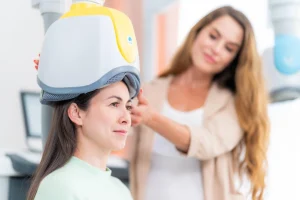
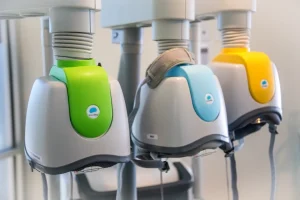
TMS is a non-invasive, FDA-approved treatment that uses magnetic pulses to stimulate the areas of the brain associated with depression that tend to be underactive in people with the condition. TMS was originally developed for depression, but it now has FDA-approved protocols for several other conditions, including anxiety, PTSD, and OCD. Standard TMS runs on a daily schedule for six to eight weeks, which fits easily into most work schedules since each session takes about the length of a lunch break.
Accelerated TMS: the same results in five days
Accelerated TMS takes the same FDA-approved technology used in standard TMS and compresses it into a five day protocol. Instead of one session a day for six to eight weeks, patients receive five sessions per day over five consecutive days, with the number of daily sessions adjusted for patient comfort.
Each session lasts 15 to 20 minutes, and with breaks built in between, a full day of treatment takes roughly three to four hours. By the end of the five days, a patient has completed the same course of treatment that would otherwise take six to eight weeks.
Accelerated TMS tends to appeal to a specific type of patient: someone who wants a faster result, someone whose schedule makes six to eight weeks of daily appointments difficult to sustain, or someone who has not gotten adequate relief from antidepressant medication and is looking for a non-medication option.
As of this writing, most insurance plans have not yet added coverage for Accelerated TMS specifically, even though the protocol itself is FDA-approved, so it is currently an out-of-pocket investment for most patients. Full details, including candidacy requirements, are available on our Accelerated TMS page.
Spravato: a nasal spray option for depression
Spravato is the FDA-approved esketamine nasal spray, used alongside an oral antidepressant for treatment-resistant depression. Unlike a prescription you pick up and take at home, Spravato is administered in the clinic under observation, since patients need to be monitored for a period after each dose.
Because it is FDA-approved specifically for depression and administered as a nasal spray rather than an IV infusion, Spravato is often covered by insurance more readily than IV ketamine, which makes it a more accessible entry point for some patients.
IV ketamine therapy: rapid relief for depression, PTSD, and chronic pain
Ketamine therapy works on the brain’s glutamate system rather than serotonin, which is why it can produce a shift in mood within hours or days of the first infusion rather than the weeks required by standard antidepressants. Most patients complete their initial course of infusions over two to three weeks.
What surprises a lot of people is that ketamine’s benefits extend beyond mood disorders. It is also used to treat chronic pain and fibromyalgia, conditions linked to central sensitization, where the nervous system becomes overly reactive to pain signals. Ketamine appears to interrupt that sensitization and reduce pain in a way that can last for weeks after treatment.
Every infusion at our clinics is monitored one on one by a registered nurse for the full session, a higher standard than the multi-room model used at many ketamine clinics.
Ketamine assisted psychotherapy: combining the medicine with the meaning
Ketamine Assisted Psychotherapy pairs a ketamine infusion with direct therapeutic support in the same session, rather than treating the medication and the therapy as two separate services. Many patients do not realize this combination exists, and assume they have to choose between a ketamine clinic and a therapist’s office. At Colorado Psychiatry Solutions, both happen together, with a therapist present during the infusion to help process what comes up.
How to know which option fits
Time available matters. Standard TMS asks for six to eight weeks of daily visits, while accelerated TMS and ketamine both work on a much shorter timeline. Prior medication history matters too. Patients who have already tried several antidepressants without relief are often better candidates for TMS or ketamine than for a fourth medication trial. The condition being treated and your insurance coverage will also shape which option makes the most sense.
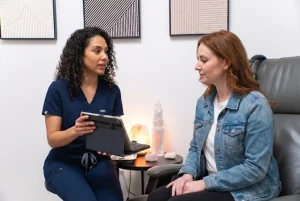
None of this needs to be figured out alone. An evaluation with our care team is the fastest way to sort through which treatment, or combination of treatments, fits your situation. Details on coverage are available on our insurance page.
Frequently asked questions
What is the difference between TMS and ketamine?
TMS uses magnetic pulses to stimulate specific brain regions from outside the skull. Ketamine works chemically, through the glutamate system, to help repair weakened neural connections. Both are FDA-approved and both can help with treatment-resistant depression, but they work through entirely different mechanisms.
Is accelerated TMS as effective as standard TMS?
Yes. Both protocols are FDA-approved and have shown similar effectiveness. The real difference is the timeline: five days versus six to eight weeks.
Do these treatments replace medication and therapy?
Usually not. Most patients use these treatments alongside medication management or therapy rather than instead of them, though for some patients they eventually become the primary treatment.
Are these treatments available near me?
Yes, across our four locations in North Colorado Springs, South Colorado Springs, East Colorado Springs, and Monument.
See the full picture
Colorado Springs residents have access to a full range of FDA-approved treatments for depression, PTSD, and anxiety, most of which never come up in a general conversation about mental health care. Schedule a consultation to find out which option fits your situation, or browse our full list of services to learn more.