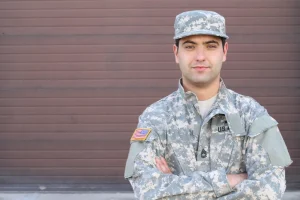



Colorado Springs is a military town, plain and simple. Fort Carson sits on the south end of the city, Peterson Space Force Base and Schriever Space Force Base hold the east side, and the Air Force Academy anchors the north. Together they help make El Paso County home to somewhere between 83,500 and 94,000 veterans, depending on which count you use, close to a fifth of every veteran living in Colorado. That is an enormous concentration of people who have served, and yet many of them still struggle to find timely, adequate mental health care. Colorado Psychiatry Solutions built a complete care system, TMS, Spravato, and ketamine infusions alongside psychiatric medication management, specifically to close that gap.
Colorado Springs’ Large Veteran Population and Why Access Still Falls Short
A large veteran population does not automatically translate into fast, effective care. Nationally, average wait times for VA mental health appointments have climbed from 21.6 to 23.5 days, now past the VA’s own 20-day standard, and wait times for PTSD-specific and other specialized services increased at more sites than they decreased. Research from the RAND Center for Military Health Policy Research found that fewer than half of veterans who need mental health care actually receive it, and of those who do, less than a third get evidence-based treatment. That gap widens further for interventional options like TMS, Spravato, or ketamine, since most VA-only or primary-care-only pathways simply do not offer them.
PTSD, Depression, and Anxiety in the Veteran Community
The numbers behind that access gap are sobering. The 2025-2026 National Health and Resilience in Veterans Study found a lifetime PTSD prevalence of 14.4% and a past-month prevalence of 7.3% among U.S. veterans overall. Among those who served in Iraq and Afghanistan specifically, the VA estimates roughly 15 out of every 100 currently live with PTSD, with lifetime rates approaching 29%. PTSD rarely shows up alone. It tends to travel with depression, anxiety, and chronic pain, which is exactly why a single-modality approach so often is not enough.
Why Standard Treatment Often Falls Short
Antidepressants can ease some of the depression and anxiety that ride alongside PTSD, but they frequently do not touch the core symptoms, the flashbacks, hypervigilance, and avoidance that make daily life hard. Finding the right medication and dose is often a slow, trial-and-error process, which is discouraging for a veteran who is already struggling. It is part of why our earlier look at psychiatrist-led PTSD care in Colorado Springs argued for a different model, and it is the reason a practice offering multiple treatment options under one roof matters so much.
A Complete Care System: TMS, Spravato, and Ketamine Under One Roof
Colorado Psychiatry Solutions treats the whole picture with three distinct tools, each suited to a different piece of the problem.
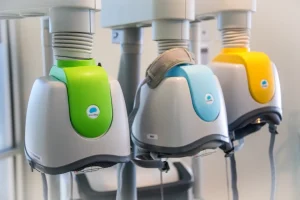
TMS. TMS is non-invasive and FDA-cleared for major depressive disorder. It works by delivering magnetic pulses that stimulate the brain’s mood-regulating regions. TMS is not FDA-cleared to treat PTSD directly, but because PTSD and depression co-occur so often, treating that depression component is a real clinical win for many veterans. TMS is covered by TRICARE and TriWest when depression is diagnosed alongside PTSD, and there are no systemic side effects or drug interactions to manage. Patients stay alert through every session and can drive themselves home afterward.
Spravato. Spravato is an FDA-approved esketamine nasal spray administered in-office under medical supervision. It is approved for treatment-resistant depression and, more recently, cleared as a standalone monotherapy as well. Colorado Psychiatry Solutions is the only Spravato-REMS certified, physician-owned practice in the area. Effects can begin within hours instead of the weeks typical of standard antidepressants, and Spravato is generally covered by insurance, which matters for veterans weighing cost against ketamine infusions, which typically are not.
Ketamine infusions. Ketamine works through the glutamate system rather than the serotonin pathway most antidepressants target, and for PTSD and depression it is generally used off-label. Relief can come within hours or days rather than weeks, which makes it a strong option for veterans in acute distress who have not found relief through standard treatment.
Having all three options in one practice, plus ongoing medication management and therapy, means a veteran is not stuck piecing together care from three or four disconnected providers.
Working With TRICARE and VA Community Care
Colorado Psychiatry Solutions is in-network with TRICARE and an in-network VA Community Care Network provider, so veterans do not have to step outside their existing benefits to access this level of care. Justin Terasas, the practice’s Military and Veteran Outreach Liaison, works specifically with veterans and referring providers to navigate authorization, so patients are not left figuring out paperwork alone. Referral requirements are straightforward, generally an ID, sponsor information, and a VA referral where applicable, and the practice handles authorization on the veteran’s behalf. Veterans, active duty military, and their family members also qualify for a 20% self-pay discount. More detail on the full process lives on the practice’s military and veteran care page.
A Veteran-Owned, Veteran-Informed Practice
Dr. Ashley Johnson, founder of Colorado Psychiatry Solutions, is a military veteran herself, and many of the practice’s clinical providers are veterans or have extensive experience working with military patients. Access is not only about wait times and insurance networks. It is also about walking into an appointment and being understood by someone who has lived a version of what you are describing, not just read about it in a textbook.
Getting Started in Colorado Springs
Colorado Psychiatry Solutions has four locations across Colorado Springs and Monument, so care is close no matter which part of the metro you call home. Call (719) 622-6522 or request an appointment online to get started.
Frequently Asked Questions
How common is PTSD among veterans? PTSD affects a meaningful share of the veteran population, with lifetime prevalence estimated at 14.4% and past-month prevalence at 7.3% across veterans overall, according to the National Health and Resilience in Veterans Study. Among those who served in Iraq and Afghanistan, the VA estimates roughly 15 out of every 100 currently live with PTSD.
Does TRICARE or VA Community Care cover TMS, Spravato, or ketamine for PTSD? TMS is covered by TRICARE and TriWest when depression is diagnosed alongside PTSD. Spravato is generally covered by insurance as a treatment for treatment-resistant depression. Ketamine infusions are typically not covered, since they are used off-label for PTSD and depression. Colorado Psychiatry Solutions can walk through your specific coverage during intake.
What’s the difference between Spravato and ketamine infusions? Spravato is an FDA-approved esketamine nasal spray given in-office under medical supervision, approved for treatment-resistant depression. Ketamine infusions are delivered intravenously and used off-label for depression and PTSD. Both act quickly compared to standard antidepressants, but they differ in FDA status, administration, and typical insurance coverage.
Do I need a referral from the VA to be seen? A VA referral is required where applicable, but Colorado Psychiatry Solutions and its Military and Veteran Outreach Liaison handle the authorization process directly, so veterans generally just need to bring an ID and sponsor information to get started.